Project Staff, Khagrachhari:
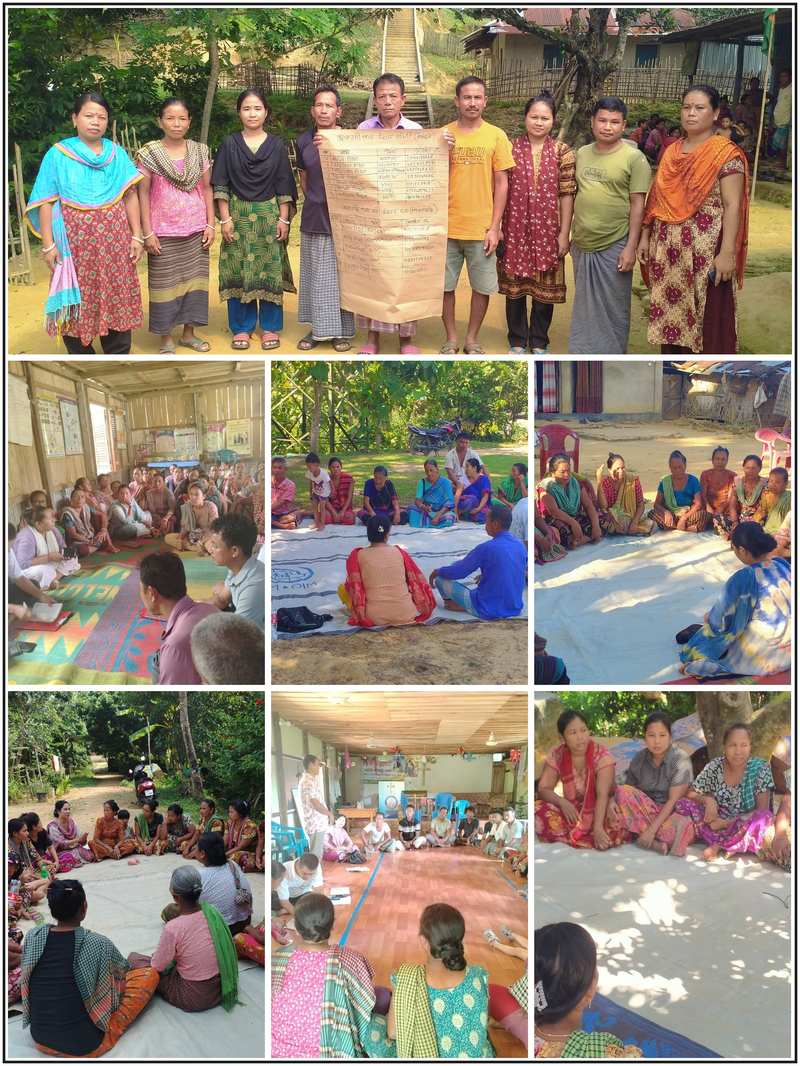
Under the Climate Resilient Livelihoods Improvement and Watershed Management in the Chittagong Hill Tracts Sector Project (CRLIWM-CHT Sector Project), work is set to begin on improving access to safe drinking water, sanitation and agricultural development in seven paras of the Khagrachhari Cluster. Social mobilisation activities, para profiling, social mapping, problem identification and intervention selection have already been completed in these paras.
The cluster falls under 1 No. Khagrachhari Union of Khagrachhari Sadar Upazila. It covers Niyong Karbari Para, Punorbason Para, Jidi Para, Akbari Para, Pukur Para (Thakurchhara), Chor Para and Gamaridhala Para. These seven paras have a total of 483 households and a population of 2,019. Among them are 742 children, 153 senior citizens and 30 persons with disabilities.
Ethnically, the Marma community is predominant in Niyong Karbari Para, Punorbason Para and Jidi Para. The Tripura community resides mainly in Akbari Para and Pukur Para. Chor Para has a mixed Tripura-Marma population, while Gamaridhala Para is inhabited by the Chakma community. In terms of socio-economic status, approximately 43.5 percent of households have been identified as very poor and 31 percent as poor.
Analysis of the para profiles shows that tube wells exist in all the paras and are functional. However, the number of tube wells is limited in some paras, and equitable access has not been fully ensured. Regarding sanitation, open defecation is almost non-existent, but most latrines are still pit latrines without water seals. The number of improved sanitary latrines remains limited. Although grid electricity connections exist, many households still depend on alternative sources of power.
Agriculture is the primary livelihood in these paras. Rice, vegetables, fruits and livestock rearing are the main occupations. However, productivity is constrained by a lack of quality seeds and saplings, inadequate irrigation facilities and financial shortages. Day labour is also an important source of income for many families.
Project officials stated that, based on social mapping and community consultations, priority has been given to safe water supply, improved sanitation and agricultural support. Preparation of the Feasibility Study Report (FSR) is currently underway. Detailed designs, cost estimates and implementation will begin after the FSR is submitted.
Project officials expressed optimism that this initiative will help improve living standards and ensure climate-resilient livelihoods in the remote paras of the hill region.