Community-led infrastructure for climate-resilient hill communities
Working with communities across Khagrachari Hill District to improve access to essential services, livelihoods and climate resilience.
About the project
Community infrastructure in Khagrachari is part of the Climate Resilient Livelihoods Improvement and Watershed Management in the Chittagong Hill Tracts (CRLIWM-CHT) Sector Project. It aims to improve access to basic services, raise incomes and strengthen climate resilience. Communities decide what is built, supervise construction and maintain the assets.
The Chittagong Hill Tracts is home to about 1.5 million people from eleven ethnic groups. Many communities have limited access to safe roads, clean water, sanitation, irrigation and electricity and face the effects of climate change and watershed degradation. In July 2023, the Asian Development Bank (ADB) approved a US$120 million loan for the wider project across Bandarban, Khagrachari and Rangamati. The Khagrachari component builds on two earlier CHT Rural Development Projects.
Executing agency: Chittagong Hill Tracts Regional Council (CHTRC), Ministry of CHT Affairs.
Project interventions
- Connectivity: Village roads, footpaths and hill steps.
- Water and sanitation: Tube wells, ring wells, gravity-fed piped water and latrines.
- Agriculture: Irrigation channels, piped irrigation, power tillers and pumps.
- Energy: Solar power for unelectrified paras.
- Women’s livelihoods: Weaving sheds.
Designs use local materials, Indigenous knowledge and nature-based solutions, with climate adaptation and disaster risk reduction built in.
Coverage
The Khagrachari component covers 272 paras in 38 unions across all nine upazilas. The project brief identifies 14 paras in Phase 1, village roads serving 60 paras across both phases, and 198 cluster-based paras in Phase 2. At least 70% of Phase 2 beneficiaries are from Indigenous communities.
How it works
The project follows ADB and Government of Bangladesh safeguards, including Free, Prior and Informed Consent (FPIC). The joint venture trains Para Development Committees (PDCs), supports safe construction and coordinates with local government. It promotes the participation of women, youth, persons with disabilities and marginalised groups.
- Consent: Discuss the proposed work in local languages with headmen, karbaris and villagers.
- Committee: Form a PDC with at least 40% women, including a woman in one of its three main posts.
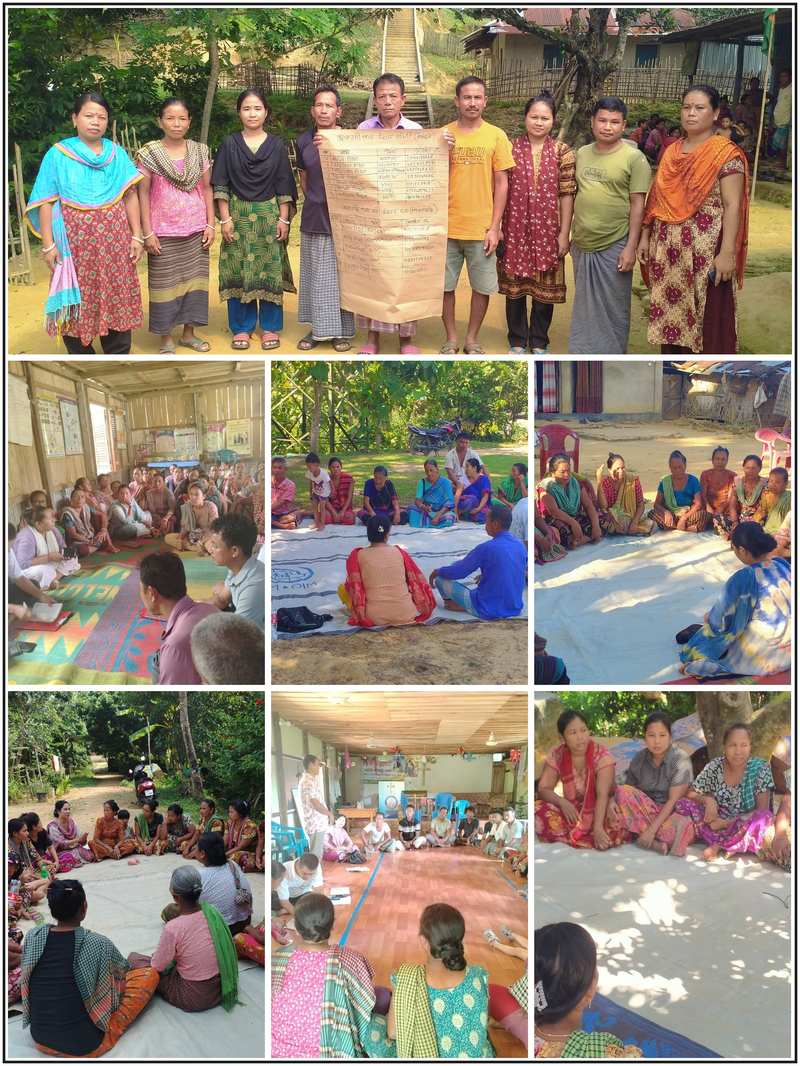
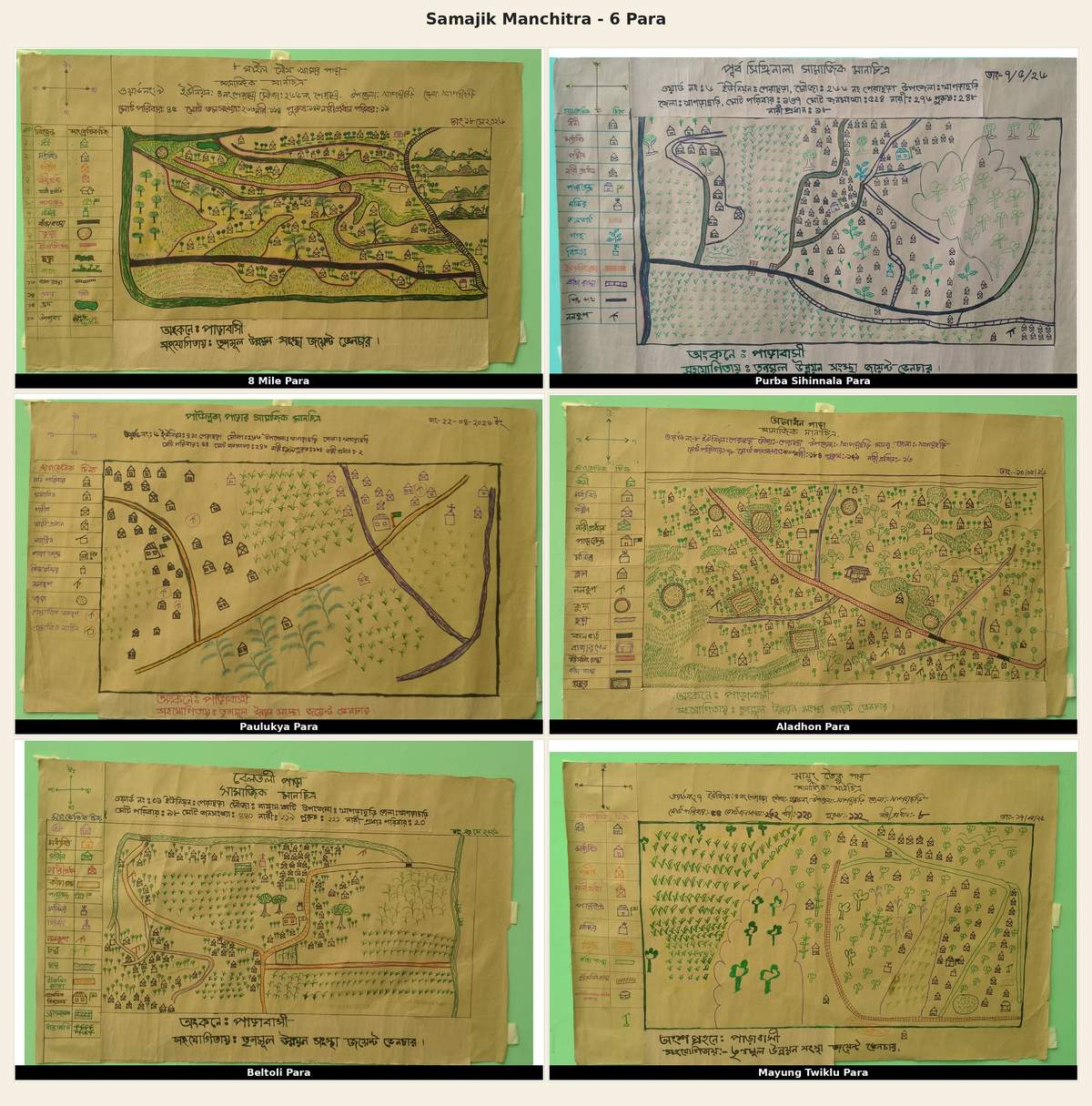
- Planning: Villagers map their para and prioritise interventions based on local needs.
- Approval: Engineers review designs and costs, and proposals go to ADB through the project offices.
- Construction: The PDC procures materials openly and hires local workers. At least 30% of the workers are women.
- Handover: Establish a maintenance committee and fund, then hand over the asset to the para.
Implementing partners
The TUS Joint Venture brings together five CHT-based NGOs. Its 28-member team (18 men and 10 women) works under the Project Management Office in Rangamati and the District Project Management Office in Khagrachari.
| Organisation | Upazilas |
|---|---|
| Trinamul Unnayan Sangstha (TUS), lead | Khagrachari Sadar, Laxmichari |
| Assistance for the Livelihood of the Origins (ALO) | Guimara, Matiranga |
| Kabidang | Matiranga, Panchari |
| Khagrapur Mohila Kalyan Samity (KMKS) | Mahalchari, Manikchari |
| Zabarang Kalyan Samity (ZKS) | Dighinala, Ramgarh, Manikchari |
Contact
TUS Joint Venture Project Office, Marma Sangsad Building (1st floor), Pankhaiyapara, Khagrachari Sadar, Khagrachari
Phone: +880-2333343082
Email: info@trinamulchtbd.org
Web: www.trinamulchtbd.org
Cluster development updates
Planning-stage information from published TUS news (15 November 2026). These are reported assessment figures and proposals, not completed construction or total project achievements.
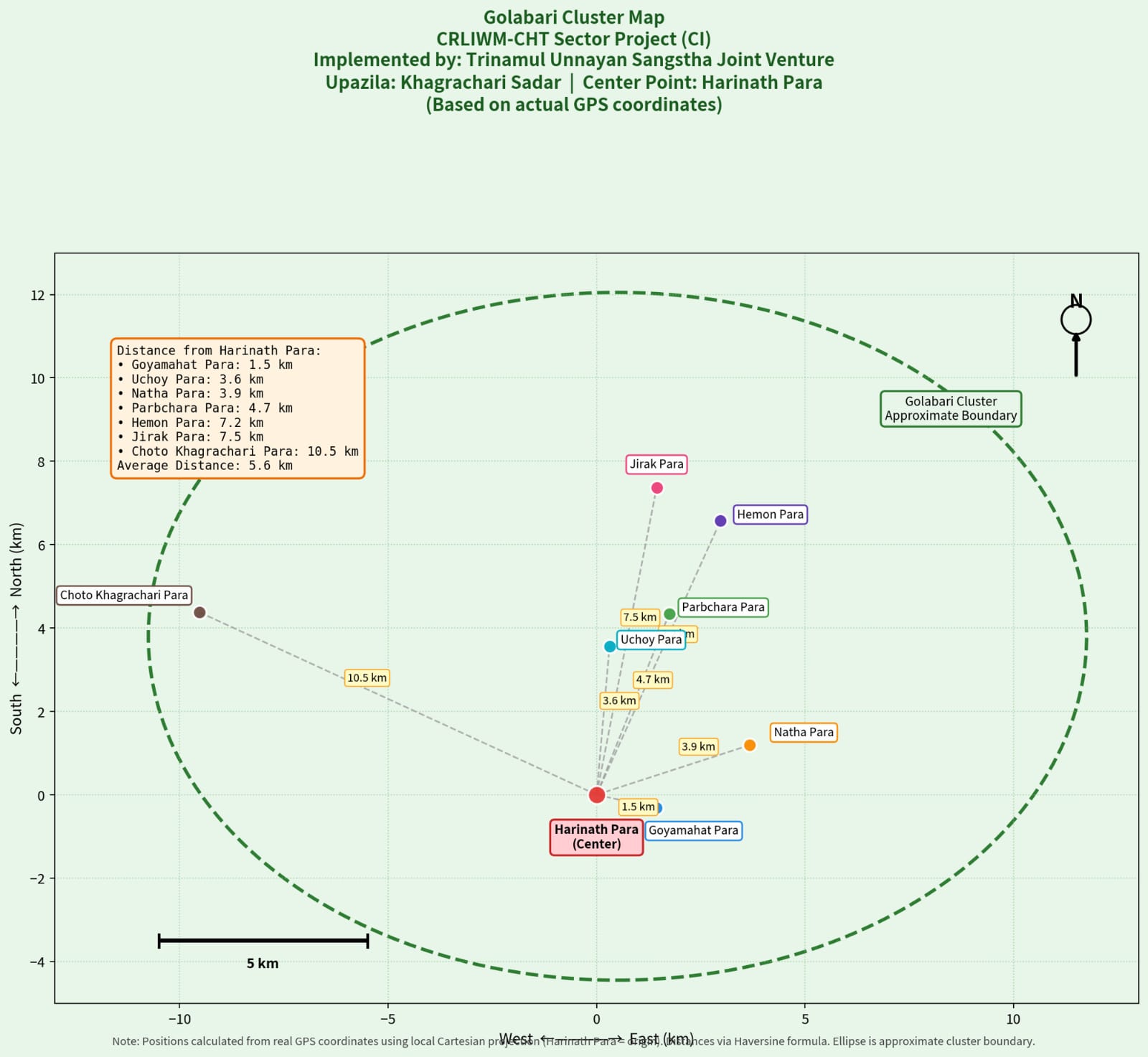
8 paras · 847 households · 4,023 people
Water, sanitation, pathways and agricultural infrastructure; estimated proposal BDT 23.77 million.
Read the project update →8 paras · 355 households · 1,601 people
Water, sanitation, household solar power and a women’s weaving facility; estimated proposal BDT 20.82 million.
Read the project update →7 paras · 483 households · 2,019 people
Community priorities include safe water, sanitation and agricultural support.
Read the project update →Project photos & community social maps
Photos and maps from published CI project news. Open an image at full size or follow the original story for context.